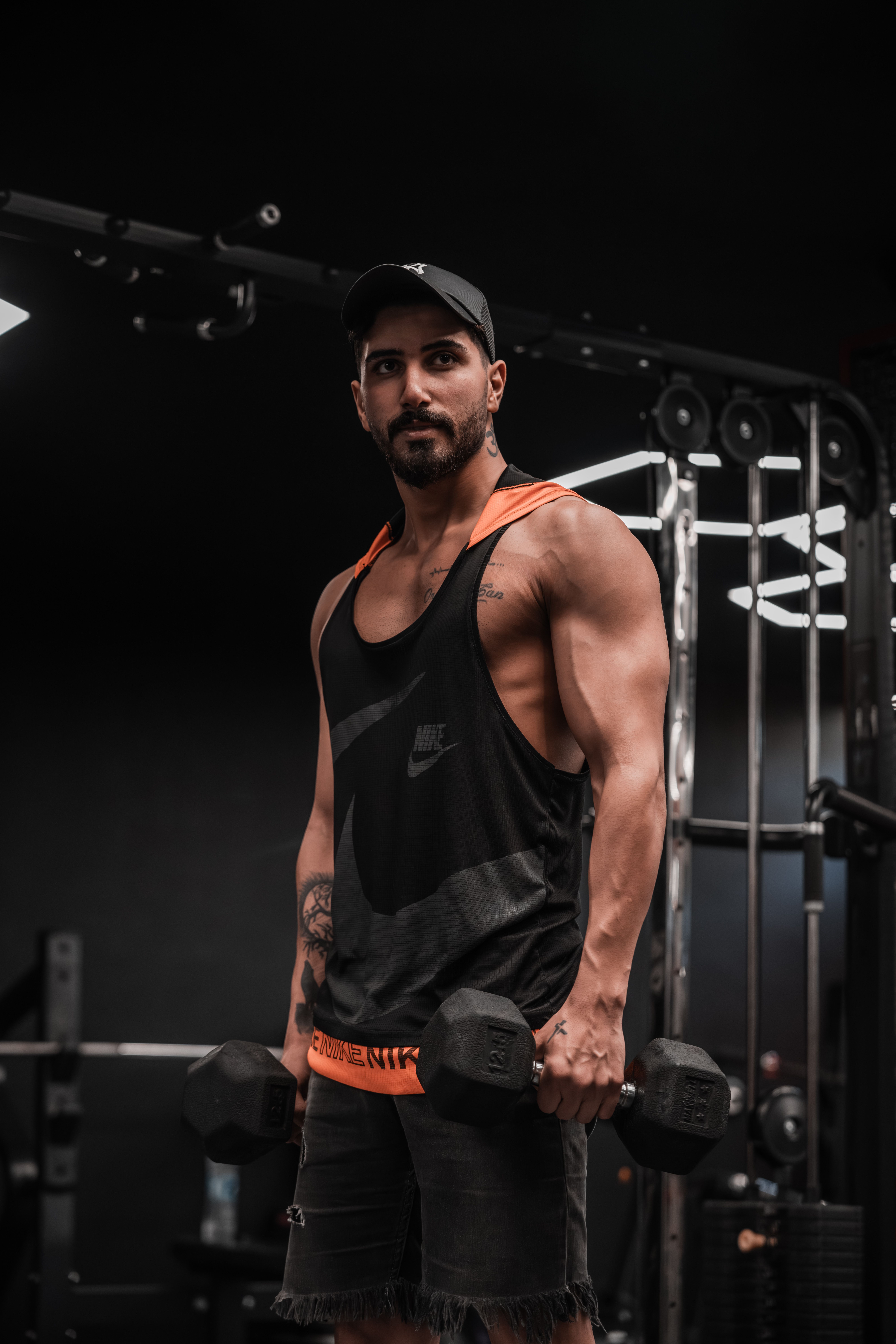


Why fitness professionals must separate visible fitness from health, competence, discipline, and human worth.
The Assumption Hiding in Plain Sight
In the first article of this series, I argued that wanting to look better is not inherently incompatible with wanting to become healthier.
Specifically, an appearance-based goal may open the door to resistance training. Over time, that motivation may broaden as clients experience greater strength, competence, confidence, and physical capability.
However, there is another side of the conversation that deserves equal attention.
What happens when appearance stops being a personal goal and becomes a professional credential?
Within the fitness industry, we frequently make rapid judgments about people based on what their bodies appear to communicate. A visibly lean or muscular individual may be assumed to possess discipline, knowledge, health, and self-control. Someone whose body falls outside a narrow fitness ideal may be assumed to lack those same qualities.
The problem is not that appearance tells us nothing. The problem is that it tells us considerably less than we often believe.
In this article, we will examine:
- Appearance as a social signal. Why attractiveness and perceived fitness can influence judgments of competence and opportunity.
- Bias within fitness settings. How body size and physique can shape expectations of both clients and professionals.
- Credibility beyond the mirror. How trainers can build an evidence-informed practice that evaluates people by what actually matters.
Appearance Is a Powerful Signal – but a Noisy One
Human beings form impressions quickly. Before we learn how someone thinks, communicates, or behaves, we notice visible characteristics such as age, body size, facial appearance, clothing, posture, and movement.
Those impressions may feel intuitive, but intuition is not the same as accuracy.
Research examining appearance and occupational outcomes suggests that physically attractive individuals are often judged more favorably across hiring, predicted success, promotion, and compensation decisions (Little & Roberts, 2012). In one longitudinal study of 203 recent university graduates, more attractive employees received greater career exposure and visibility early in their careers, which helped explain differences in salary two years later (Dossinger et al., 2019).
Importantly, these findings do not demonstrate that attractive people are more competent. They demonstrate that others may provide them with opportunities to demonstrate, develop, and be rewarded for their competence.
That distinction is easy to miss.
Over time, a biased first impression can become a real advantage. Greater visibility creates more opportunities to contribute. More opportunities create more evidence of performance. Eventually, the original appearance-based assumption may disappear behind a résumé of experiences that the assumption helped make possible.
This is one reason the so-called “beauty premium” matters to fitness professionals. It reminds us that appearance does not merely influence attraction. It can influence access, credibility, and whose expertise is given the benefit of the doubt.
The Fitness Industry Has Its Own Version of Pretty Privilege
Few professions connect appearance and expertise as openly as ours. Prospective clients routinely evaluate trainers before a conversation ever begins. They see a photograph, observe a physique across the gym, or scroll through a social media profile. From those limited cues, they begin answering questions that appearance cannot reliably resolve:
- Does this person understand exercise science?
- Can they modify a program around pain, disability, menopause, diabetes, or medication use?
- Will they listen?
- Will they respect scope of practice?
- Can they explain why an exercise belongs in the program?
A physique cannot answer any of those questions.
NFPT has previously explored how clients may equate a trainer’s physique with competence in Gender Bias in Trainer Selection. That perception is understandable in a profession centered on physical training. It is also incomplete.
A trainer’s own participation in exercise may support empathy, demonstration skill, and professional authenticity. Yet visible leanness or muscularity cannot reveal education, ethical judgment, communication ability, programming competence, health status, genetics, medication use, injury history, or the methods used to create that appearance.
Likewise, a professional who does not resemble the industry’s dominant visual ideal may still possess extraordinary knowledge, coaching skill, and lived insight.
This does not mean trainers should become indifferent to professional presentation. It means presentation should not be confused with qualification.
When Looking Healthy Becomes a Moral Judgment
Appearance bias becomes especially harmful when body size is treated as evidence of character.
The stereotype is familiar: a lean body signals discipline, while a larger body signals laziness or poor self-control. Contemporary science does not support such a simple interpretation of body-weight regulation, which is influenced by interacting biological, environmental, social, behavioral, medical, and economic factors.
A multidisciplinary joint international consensus statement on ending weight stigma concluded that weight stigma causes psychological and physical harm, contributes to discrimination, and rests partly on inaccurate assumptions about personal responsibility (Rubino et al., 2020).
The fitness profession is not immune. A systematic review found evidence of weight bias in 17 of 20 studies examining exercise professionals, including personal and group fitness trainers, physical educators, and physical therapists (Panza et al., 2018). Most studies were cross-sectional, so the review cannot tell us precisely how bias changes client outcomes. Nevertheless, the consistency of the pattern should make us uncomfortable enough to examine our own practice.
Bias does not always sound hostile. It may come as a surprise when a larger-bodied client performs well, when expectations for what an older client can learn are lowered, when assumptions are made that a thin client is metabolically healthy, or when the belief is held that a visibly muscular trainer must be more knowledgeable.
In each case, appearance becomes a shortcut for assessment, and shortcuts become dangerous when they replace curiosity.
Weight Stigma Can Undermine the Behavior We Hope to Support
Some professionals continue to assume that discomfort or shame will motivate behavior change.
The evidence suggests a considerably more complicated—and less encouraging—picture.
A systematic review of 38 studies found that weight-based teasing, everyday discrimination, and internalized weight stigma were often associated with lower physical activity, although findings were mixed, frequently indirect, and dominated by observational designs (Pearl et al., 2021). We should therefore avoid claiming that stigma always causes exercise avoidance. We should also avoid treating shame as an evidence-based coaching strategy.
From a practical perspective, the question is not whether a trainer intended to stigmatize someone. The question is what the client experiences.
Does the assessment feel like information or judgment? Does the marketing communicate possibility or deficiency? Does progress testing expand the client’s understanding or repeatedly return their attention to the body part they already dislike most?
These questions align with NFPT’s guidance on Positive Body Image Marketing in Personal Training, which encourages inclusive imagery, non-scale victories, and language centered on capability and well-being.
The objective is not to pretend body composition never matters. It is to ensure that a measurement remains a measurement—not a verdict about discipline, credibility, or worth.
What Competence Actually Looks Like
If appearance is an unreliable professional credential, what should clients and trainers evaluate instead?
Competence is rarely captured in a single photograph. It becomes visible across repeated decisions.
To illustrate, a competent trainer conducts an appropriate health-history and readiness process. They select assessments that answer a relevant question. They explain the rationale for programming decisions. They progress and regress exercises deliberately. They recognize uncertainty, document outcomes, communicate respectfully, remain within scope, and refer when another professional’s expertise is required.
Perhaps most importantly, competent trainers update their thinking when new evidence or client feedback suggests a better path.
Notice that none of these qualities require a particular body type; on the contrary, they require education, judgment, humility, and practice.
This reframing also protects trainers. Fitness professionals age, experience injuries, navigate illness, take medications, move through pregnancy or menopause, and encounter seasons when their bodies do not resemble their most marketable photograph. If professional worth depends on maintaining a narrow appearance indefinitely, credibility becomes both fragile and physiologically unrealistic.
A career built on explanation, empathy, outcomes, and ethical decision-making is considerably more durable.
Practical Applications for Personal Trainers
Appearance bias is not eliminated by announcing that we do not have it. It is managed through systems that make better judgment easier.
- Audit first impressions. Before labeling a client motivated, deconditioned, healthy, noncompliant, or athletic, identify what evidence actually supports that conclusion.
- Separate observation from interpretation. ‘The client completed eight repetitions’ is an observation. ‘The client lacks discipline’ is an interpretation that requires far more evidence.
- Standardize important decisions. Use consistent intake questions, readiness screening, assessment criteria, progression rules, and referral thresholds rather than relying on whether someone looks fit.
- Diversify professional imagery. Review whether your website, social media, and client success stories represent a range of ages, abilities, body sizes, and reasons for training.
- Broaden proof of progress. Pair body-composition measures, when appropriate, with strength, function, technique, energy, recovery, confidence, attendance, and participation in valued activities.
- Build credibility explicitly. Make education, certifications, coaching process, scope of practice, communication, and client-centered outcomes easier to see than your physique.
- Use respectful, person-first language. The UConn Rudd Center’s guidance for the respectful portrayal of people affected by higher weight provides a useful external resource for reviewing words and images used in professional communication. Review the Rudd Center media guidelines.
Conclusion
The first article in this series began with a simple argument: wanting to look better does not make a client’s goal illegitimate.
This second article adds an equally important boundary.
Looking better does not make a person healthier, more disciplined, more competent, or more deserving of opportunity.
Appearance may influence how people are perceived. In some settings, it may even influence who receives visibility, trust, or economic advantage. But those outcomes reveal something about the observer and the system—not necessarily the person being observed.
As fitness professionals, we work in an industry where bodies are always visible. We cannot prevent every first impression. We can decide whether that impression ends our assessment.
Our clients deserve to be evaluated based on their goals, experiences, capabilities, health histories, and responses to training—not on assumptions tied to a body type.
Our colleagues deserve to be evaluated through their knowledge, ethics, communication, and coaching—not through the sharpness of an abdominal muscle.
And our profession deserves a definition of credibility strong enough to survive the mirror.
References
Dossinger, K., Wanberg, C. R., Choi, Y., & Leslie, L. M. (2019). The beauty premium: The role of organizational sponsorship in the relationship between physical attractiveness and early career salaries. Journal of Vocational Behavior, 112, 109-121. https://doi.org/10.1016/j.jvb.2019.01.007
Little, A. C., & Roberts, S. C. (2012). Evolution, appearance, and occupational success. Evolutionary Psychology, 10(5), 782-801. https://doi.org/10.1177/147470491201000503
Panza, G. A., Armstrong, L. E., Taylor, B. A., Puhl, R. M., Livingston, J., & Pescatello, L. S. (2018). Weight bias among exercise and nutrition professionals: A systematic review. Obesity Reviews, 19(11), 1492-1503. https://doi.org/10.1111/obr.12743
Pearl, R. L., Wadden, T. A., & Jakicic, J. M. (2021). Is weight stigma associated with physical activity? A systematic review. Obesity, 29(12), 1994-2012. https://doi.org/10.1002/oby.23274
Rubino, F., Puhl, R. M., Cummings, D. E., Eckel, R. H., Ryan, D. H., Mechanick, J. I., Nadglowski, J., Ramos Salas, X., Schauer, P. R., Twenefour, D., Apovian, C. M., Aronne, L. J., Batterham, R. L., Berthoud, H.-R., Boza, C., Busetto, L., Dicker, D., De Groot, M., Eisenberg, D., . . . Dixon, J. B. (2020). Joint international consensus statement for ending stigma of obesity. Nature Medicine, 26, 485-497. https://doi.org/10.1038/s41591-020-0803-x