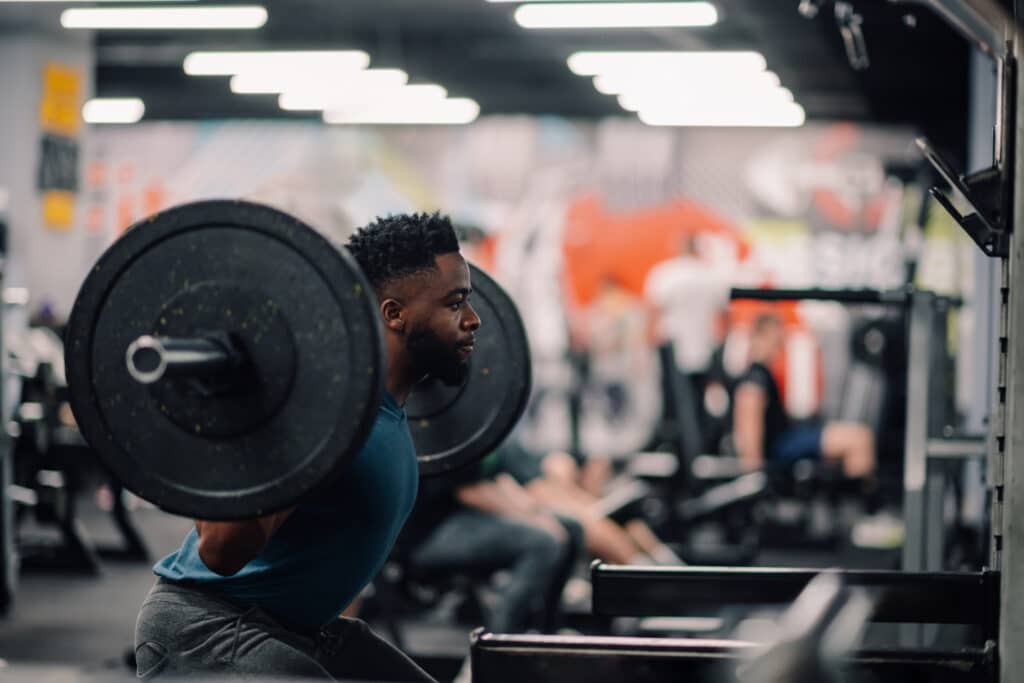


Most personal training clients arrive with muscle imbalances that need to be corrected in order to make gains and prevent injury. The most skillful of trainers should employ initial assessments and be able to accurately assess most of these imbalances with a single movement: the overhead squat.

This movement is the simplest, quickest way to uncover postural distortions and muscle imbalances. While you won’t get all the information you need, it is a great starting point for a full exploration of osteokinematic (movement of bones around a joint) dysfunction.
When performed with no weight or props, the overhead squat assessment (OHSA) will point to upper body dysfunction (UBD), lumbopelvic hip complex dysfunction (LPHCD) and lower extremity dysfunction (LED), if any or all of these patterns are present.
Understanding the full breadth of movement dysfunction clusters and patterns requires a solid understanding of musculoskeletal anatomy and physiology. For the purpose of this blog, think of this as a simplified overview of what an OHSA can tell you.
Overhead Squat Execution
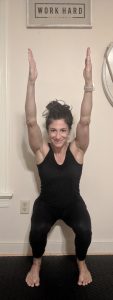
- Have your client face you with feet shoulder-width apart and instruct him or her to raise arms over her head, palms forward.
- Tell the client to perform a squat slowly and to pause at the bottom, but do not give additional cues.
- Have the client repeat the movement twice so you can watch each area separately and make notes.
- Repeat the process so you are viewing from right, from behind, and from the left.
Signs of Dysfunction
The following are the classic signs to take note of and possibly perform further assessments in those areas to get more information:
- Arms fall—Arms that drift forward or adduct to the sides are an indication of short latissimus dorsi, pointing to either UBD or LPHCD.
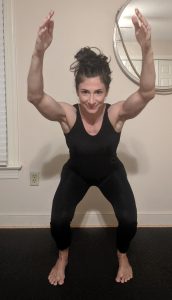
- Shoulders elevate—If the shoulders drift high up towards the ears, UBD is present.
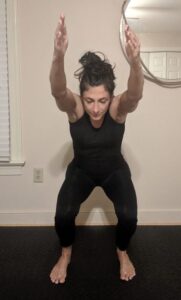
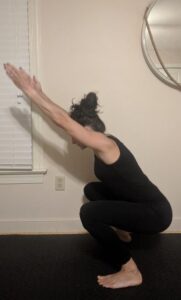
- Excessive lordosis—An anterior pelvic tilt while either standing statically or at the bottom of the squat is apparent can be a feature of LED, UBD or LPHCD.
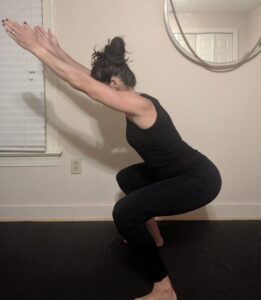
- Excessive forward lean—At the bottom of the squat, the torso and the shins should be parallel. If the upper body is too far forward then LED is present (hang with me on this one).
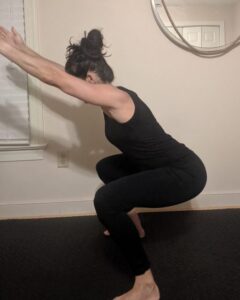
- Knees bow out—Functional knee varus (knees are wider than hips and feet) points to LED and/or LPHCD.
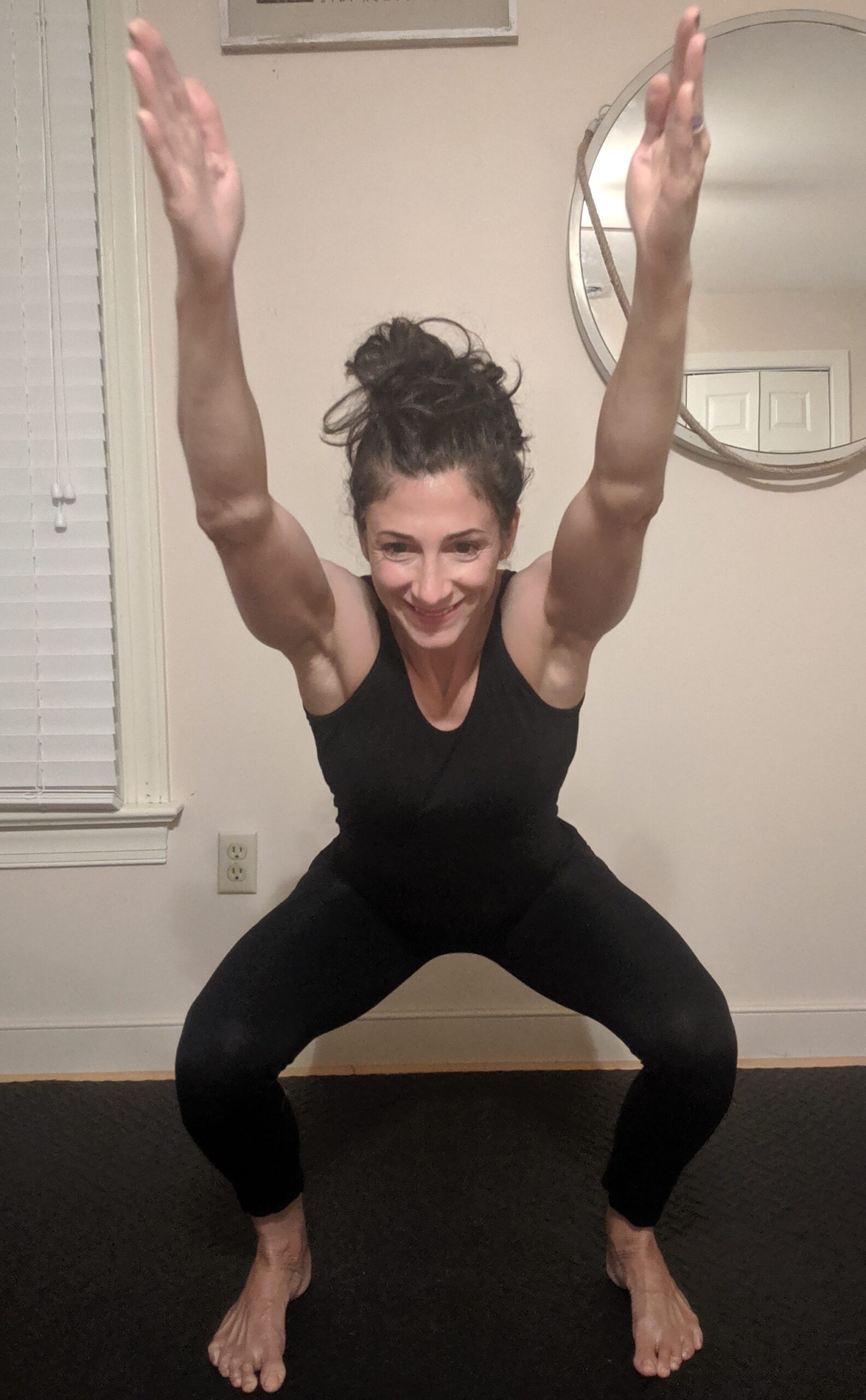
- Knees bow in—Functional knee valgus (knees are closer than hips and feet) can be a sign of LED and/or LPHCD.
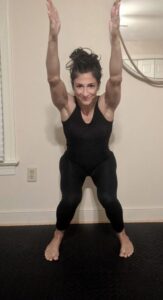
- Feet flatten—Excessive eversion signals LED.
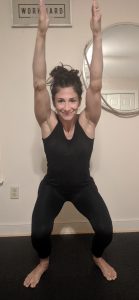
- Feet turn out—When the knees are directed straight ahead but the feet are externally rotated (tibial external rotation), both LED and LPHCD are present.
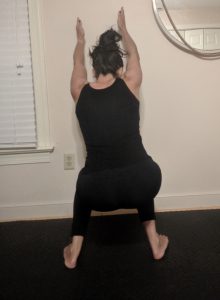
- *Asymmetrical Weight Shift (AWS)—If, when viewing from front or back at the bottom of the squat, the hips are shifted more to one side, you’ve got a complex issue on your hands! (Pun intended!) Asymmetry is a strong predictor of injury, so narrowing down this issue should be a priority, but it isn’t easy. I will delve deeper in a future blog, but for now, suffice it to say that one-sided dysfunctions of the lower body and LPHC are present with AWS, and possibly sacroiliac dysfunction.
- If you observe all the signs in the photo below in addition to the AWS, you can collect more information: Feet flatten, knees bow in (L>R), right shoulder girdle elevates, and side view would show anterior pelvic tilt.
Interpreting Signs of Dysfunction
I gave you the quick and dirty explanations above for each compensation sign, but to truly interpret those signs and apply corrective techniques will require gaining full understanding of each dysfunction pattern.
Addressing lower extremity dysfunction as a general rule is wise to address first, since often, resolving issues from the ground up may resolve issues further up the kinetic chain. After LED is addressed and corrected, then a closer look can at LPHCD and then UBD.
That’s not to say you can’t perform the assessment and get the gears turning in your brain. The more assessments you attempt, the better you will get at quickly grasping your clients’ issues!
*The above concepts are directly adapted from the Brookbush Institute and its Human Movement Specialist certification which I am currently pursuing.
________________________