


Once you have determined what your client’s shoulder joint mobility restrictions are, you can begin improving mobility by lengthening and strengthening the correct muscles. For each movement restriction of the shoulder that your client exhibits, there is an outlined corrective exercise process you can follow to help improve overall shoulder mobility.
Some clients may have only one shoulder joint action that is limited, and some have all three. The following are ordered in a fashion consistent with the most likely mobility degradation. In other words, the thoracic spine is more likely to become restricted before scapular mobility is limited, and glenohumeral external rotation usually manifests after scapular rotation has become inefficient.
Corrective Exercise for Thoracic Spine and Latissimus Dorsi Mobility


Corrective Exercise for Scapular Mobility
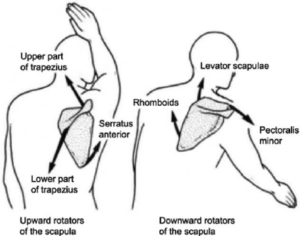
Those pesky scapulae are notoriously confusing, what with all of their unique motions like “upward rotation” and “protraction”. No other joints perform those actions, so we have to take special care to not only understand them well, but recognize when they’re not doing what they’re supposed to do.
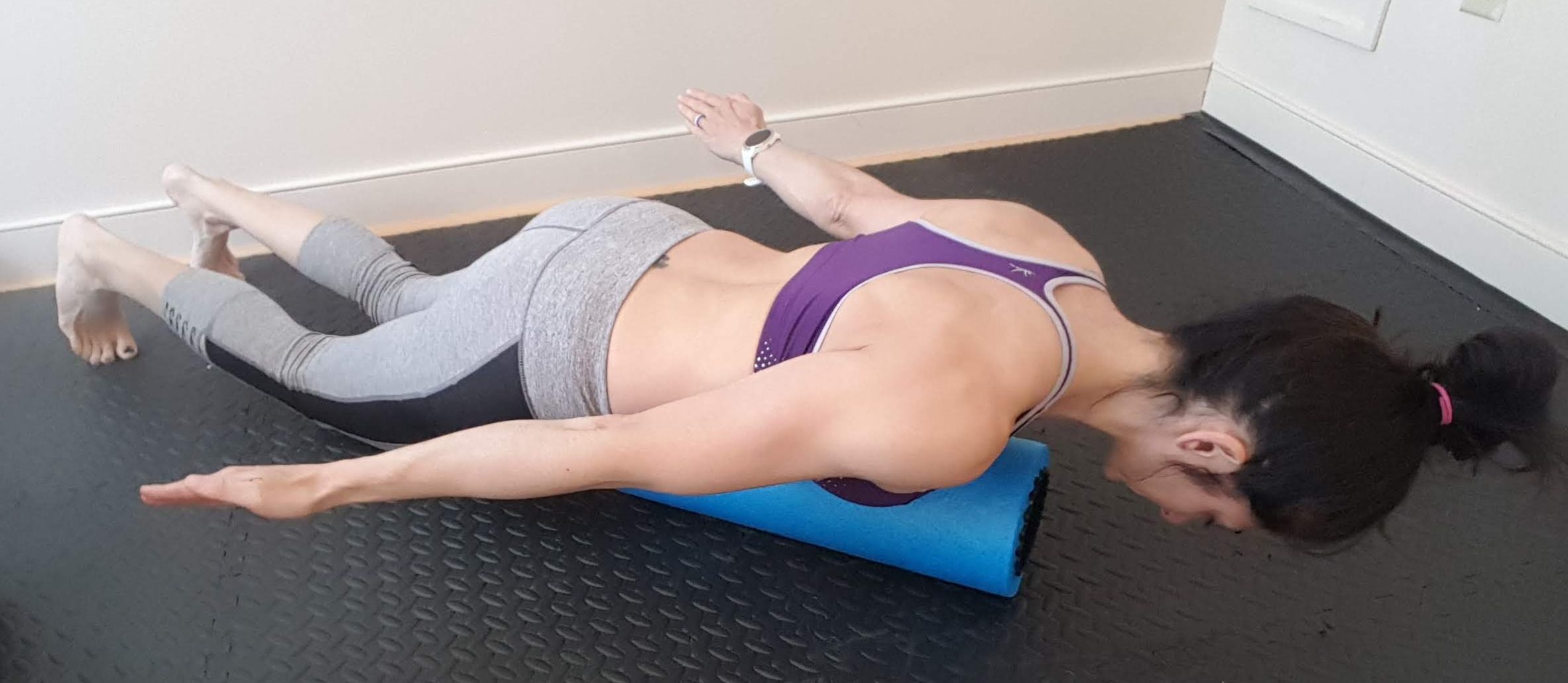
Corrective Exercise for Glenohumeral External Rotation


Think of it this way: if you try to work on overhead external rotation before improving thoracic spine extension and lat length, your client won’t be able to get their shoulders in the optimal position to perform external rotation in the saggital plane.
So if you find your client is overly internally rotated at the glenohumeral joint, and you’ve already addressed thoracic and scapular mobility, it’s time to go to town on improving external rotation (*it’s not that internal rotation strength is never a problem, but it’s far less likely than external rotation weakness).
These exercises are only a snapshot of the range of approaches that can be taken to improve overall shoulder mobility in preparation for pull-up progressions. Take your client’s personal history, strengths and tolerances into account. You may choose to work on one area of mobility at a time, and move onto the next once improvements are noted. You may also explore new and creative ways to dynamically challenge shoulder mobility safely and in ways that can work into your programming for pull-up progressions.