

Emphasis
The primary muscles stressed in this movement are the chest muscles (upper pectorals). The secondary muscles stressed are the shoulders and triceps.
Starting Position
While lying on an incline bench set at a 30-45 degree angle, push your chest up toward the ceiling and squeeze your shoulder blades together. This will help to isolate the upper and central muscles in the chest. Using the suggested grip, lift the bar out of the rack with your arms straight up and place it according to its decent.
Movement
Take two to three seconds to lower the bar down until your elbows are at 90 degrees, keeping your elbows out to the side. Press the bar up to the starting position, contracting your chest muscles hard during the movement.


Training Tips
- When pressing the bar up to the starting position do not overextend and raise your shoulders off the bench. This will help isolate muscles.
- Place a pad on your chest (one to four inches) to ensure that you don’t go below 90 degrees (zero leverage point).
- Adjust the seat to a position where your forehead is even with the bar. This allows you to be close enough to easily rack the bar after your last rep but far enough away so the bar does not hit the rack during the exercise, adjust accordingly.
Options
There are three different grips that can be used for this exercise. Hand positioning on the bar will be determined by how wide your shoulders are and how long your arms are.
- Medium Grip – In the down position your forearms are stright up and down. This is your power grip, stressing the upper and center chest.
- Close Grip – Your hands are placed half to one inch closer to the middle than the medium grip. The stress of this grip is placed more toward the middle of the chest.
- Wide Grip – Your hands are placed half to one inch wider than the medium grip. The stress of this grip is placed on the outside of the chest.
Warning Tips
- Do not overextend your shoulder when pressing the bar up. Failure to do so can result in serious injury to your shoulders.
- Do not excessively arch your back or raise your hips off the bench. Failure to do so can result in serious injury to your back.
- Do not lower the bar any faster than two to three seconds. You must be in control at all times during this movement. The faster you perform this movement, the less control you will have which in turn will increase your risk of injury.
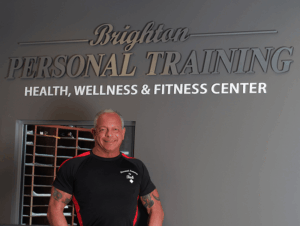
As one of the most successful Professional Personal Trainers and Exercise/Fitness Therapists in the United States, Robert continues to remain at the forefront of the industry by providing his clients with a thorough education and the tools to implement that education. By improving his client’s physical health, strength, endurance, cardiovascular fitness and nutritional habits, he is able to motivate them to lead longer, happier and more productive lives. Find out more about Robert and his personal training career and services, here.