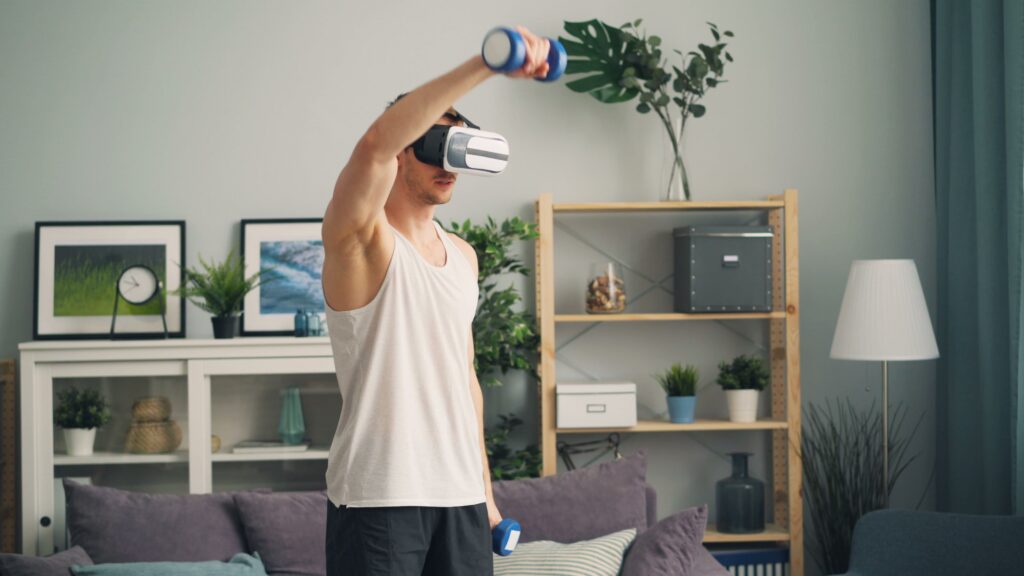

Spend a day on Instagram, and you’ll no doubt encounter the term “exercise snacks.” Despite some leading practitioners, clinicians, and researchers extolling their many benefits, exercise snacks raise an appealing question: can a client accomplish something worthwhile in the spare few minutes between work meetings if dedicated gym time that evening went out the proverbial window? For personal trainers working with busy adults, that question deserves more than either an enthusiastic yes or a dismissive shake of the head. Brief exercise can be useful, provided we remain clear about what the activity is designed to accomplish and what the evidence supports.
In my earlier discussion of muscle health in workplace wellness, I considered why trainers should pay greater attention to professionals and educators. This article takes that conversation into the working day itself. Specifically, how do we create useful opportunities to exercise when the client’s calendar cannot accommodate another long appointment? Short bouts offer a scheduling option, but convenience should not be mistaken for a guarantee of adaptation.
In this article, we will examine:
- How trainers can introduce, evaluate, and progress a realistic workday plan.
- How movement breaks differ from brief, structured exercise.
- What research supports about fitness and metabolic responses, including findings that were not positive.
Different Bouts Serve Different Purposes
The phrase exercise snack has become broad enough to describe activities that are physiologically quite different. A comfortable walk down the hallway, a vigorous stair climb, and a challenging set of chair rises may all be brief. They do not necessarily provide the same stimulus or develop the same capacity.
Definitions also vary across studies. Rodríguez et al. (2026) included structured bouts lasting no more than five minutes, repeated at least twice daily on at least three days each week. Other protocols use considerably shorter bouts. Consequently, a headline about exercise snacks tells us little until we examine the actual exercise, effort, frequency, and population.
For coaching purposes, I find it useful to separate a movement break from a training bout. A movement break interrupts prolonged sitting and creates an opportunity to move. A training bout deliberately challenges a particular capacity. To illustrate, opening a textbook during a break and practicing a difficult problem may both take five minutes, but the learning demands differ. In the same way, duration alone cannot tell us what a brief exercise bout is likely to develop; this is a coaching distinction, not a universal research classification.
A client may need both. Someone who completes a well-designed gym session can still spend most of the working day seated. Conversely, a person who walks between appointments may still need progressive resistance training. Before deciding which brief activity belongs in the client’s week, ask what’s missing.
Read the Outcome Before Repeating the Headline
In a small, randomized trial, Jenkins et al. (2019) assigned 24 sedentary young adults to vigorous stair climbing or a nontraining control. The climbing group completed three bouts per day, separated by one to four hours, on three days each week for six weeks. Peak oxygen uptake improved relative to the control group, although the absolute increase was modest.
That is encouraging evidence for a specific intervention. It does not establish that any short activity improves fitness, or that stair climbing produces the same response in every client. Nor does it demonstrate that the protocol prevents future cardiovascular events. The study’s stair climbing findings should travel with those boundaries.
The broader synthesis is similarly instructive. Across 11 randomized trials involving 414 participants, Rodríguez et al. (2026) found improved cardiorespiratory fitness in inactive adults with moderate certainty of evidence. Evidence for improved muscular endurance in older adults was of very low certainty. The review found no significant effects on lower-limb strength or several cardiometabolic outcomes, including body composition, blood pressure, and blood lipids.
These results make a useful coaching distinction. For example, we can discuss a promising strategy for improving a measured fitness outcome without presenting it as a comprehensive substitute for training. Hence, a favorable result in one domain does not establish benefit in another, and a nonsignificant result does not prove that benefit is impossible. It tells us that the available evidence did not establish that effect.
Feasibility and Effectiveness Are Separate Questions
A more recent real-world trial provides an important counterweight. Babir et al. (2025) randomized 77 inactive adults to remotely delivered bodyweight exercise snacks or stretching. Over 12 weeks, participation and enjoyment were encouraging, but there were no significant between-group differences in changes in peak oxygen uptake or blood biomarkers of cardiometabolic health.
The real-world trial matters because a program can fit into people’s lives without producing the physiological change we hoped to see. Adherence gives a stimulus the opportunity to work; it does not establish that the stimulus was sufficient. Consequently, we need to evaluate both participation and the outcome we intended to influence.
This also helps us resist a familiar marketing temptation. When short exercise is easy to explain and convenient to perform, it can become attractive to promise that a few minutes will replace everything else. The findings do not justify that promise. They support testing an appropriately designed option, observing the response, and adjusting rather than treating the label itself as the active ingredient.
Breaking Up Sitting Addresses Another Question
Movement breaks have their own evidence base. Dunstan et al. (2012) studied 19 adults with overweight or obesity in an acute randomized crossover experiment. Two-minute light- or moderate-intensity walks every 20 minutes reduced postprandial glucose and insulin responses compared with uninterrupted sitting during the laboratory observation period.
The important word here is acute. A response measured after a standardized test drink is not the same as a demonstrated reduction in long-term disease incidence. Trainers can support activity habits, but should not prescribe walking breaks as medical treatment or advise clients to change medication based on this experiment.
NFPT’s discussion of staying active during the workday provides a practical starting point for finding opportunities to move. We can then ask whether the client primarily needs to interrupt sitting, develop fitness, or add purposeful resistance exercise. Those goals may overlap, but measuring one does not confirm all of them.
Match the Plan to the Person and the Setting
Before introducing a vigorous snack, complete appropriate preparticipation screening and review the client’s current ability, health history, and any need for medical clearance. A short duration does not make a demanding exercise automatically appropriate. Stairs also introduce environmental and balance considerations that a published protocol cannot resolve for us.
Workplace access matters. Some people can leave a desk whenever they choose; others cannot step away from a classroom, production line, or care responsibility. Clothing, mobility needs, available space, and an employer’s break policies may further constrain the plan. In corporate wellness, a supportive environment must allow participation rather than simply distribute reminders.
Consider a hypothetical client who spends much of the day at a computer and is returning to exercise. Start by agreeing on a feasible movement opportunity, such as a brief walk during an existing break. If screening, ability, and preferences permit, a later phase might include a brief structured exercise bout. These are individualized coaching options, not a reproduction of a research protocol or a proven universal dose.
For older adults, exercise selection and supervision deserve particular attention. Perkin et al. (2019) reported improved sit-to-stand performance in a small, 28-day pilot study of home exercise snacking. That finding is promising, but task performance should not be treated as interchangeable with maximal strength, and a pilot study cannot establish the best program for every older adult.
Evaluate Participation and Adaptation
Agree on the behavior before choosing the test. Record when the activity happens, what the client performs, and how demanding it feels. Then choose an assessment that matches the goal and falls within your competence. A record of completed breaks evaluates participation; a standardized fitness assessment addresses a different question.
NFPT’s guidance on identifying personal training goals can help structure that conversation. A useful check-in asks whether the plan was practical, whether the exercise remained appropriate, and whether the intended capacity is changing. If participation is high but progress is absent, examine the stimulus and assessment rather than assuming the client has failed.
The Physical Activity Guidelines for Americans remain the larger reference point: adults should work toward recommended aerobic activity and muscle-strengthening activity on at least two days each week, according to their abilities and circumstances. Activity need not occur in ten-minute bouts to count toward aerobic recommendations (U.S. Department of Health and Human Services, 2018). Removing that threshold does not remove the importance of total activity or sufficient challenge.
Brief exercise deserves a place in our coaching toolbox. Its value becomes clearer when we specify the purpose, respect the limits of the research, and evaluate what happens next. Help clients find a workable beginning, then build toward the capacities their goals require.
References
Babir, F. J., Islam, H., McCreary, S., Vaz, E., Falkenhain, K., Cranston, K. D., Jung, M. E., Singer, J., Sandilands, R. E., Marcotte-Chénard, A., Stamatakis, E., Richards, D. L., Gibala, M. J., & Little, J. P. (2025). Technology-enabled exercise “snacks” are feasible to perform in a real-world setting: A randomized controlled trial. Scandinavian Journal of Medicine & Science in Sports, 35(8), Article e70117. https://doi.org/10.1111/sms.70117
Dunstan, D. W., Kingwell, B. A., Larsen, R., Healy, G. N., Cerin, E., Hamilton, M. T., Shaw, J. E., Bertovic, D. A., Zimmet, P. Z., Salmon, J., & Owen, N. (2012). Breaking up prolonged sitting reduces postprandial glucose and insulin responses. Diabetes Care, 35(5), 976–983. https://doi.org/10.2337/dc11-1931
Jenkins, E. M., Nairn, L. N., Skelly, L. E., Little, J. P., & Gibala, M. J. (2019). Do stair climbing exercise “snacks” improve cardiorespiratory fitness? Applied Physiology, Nutrition, and Metabolism, 44(6), 681–684. https://doi.org/10.1139/apnm-2018-0675
Perkin, O. J., McGuigan, P. M., & Stokes, K. A. (2019). Exercise snacking to improve muscle function in healthy older adults: A pilot study. Journal of Aging Research, 2019, Article 7516939. https://doi.org/10.1155/2019/7516939
Rodríguez, M. Á., Quintana-Cepedal, M., Cheval, B., Thøgersen-Ntoumani, C., Crespo, I., & Olmedillas, H. (2026). Effect of exercise snacks on fitness and cardiometabolic health in physically inactive individuals: Systematic review and meta-analysis. British Journal of Sports Medicine, 60(2), 133–141. https://doi.org/10.1136/bjsports-2025-110027
U.S. Department of Health and Human Services. (2018). Physical activity guidelines for Americans (2nd ed.). https://health.gov/sites/default/files/2019-09/Physical_Activity_Guidelines_2nd_edition.pdf