

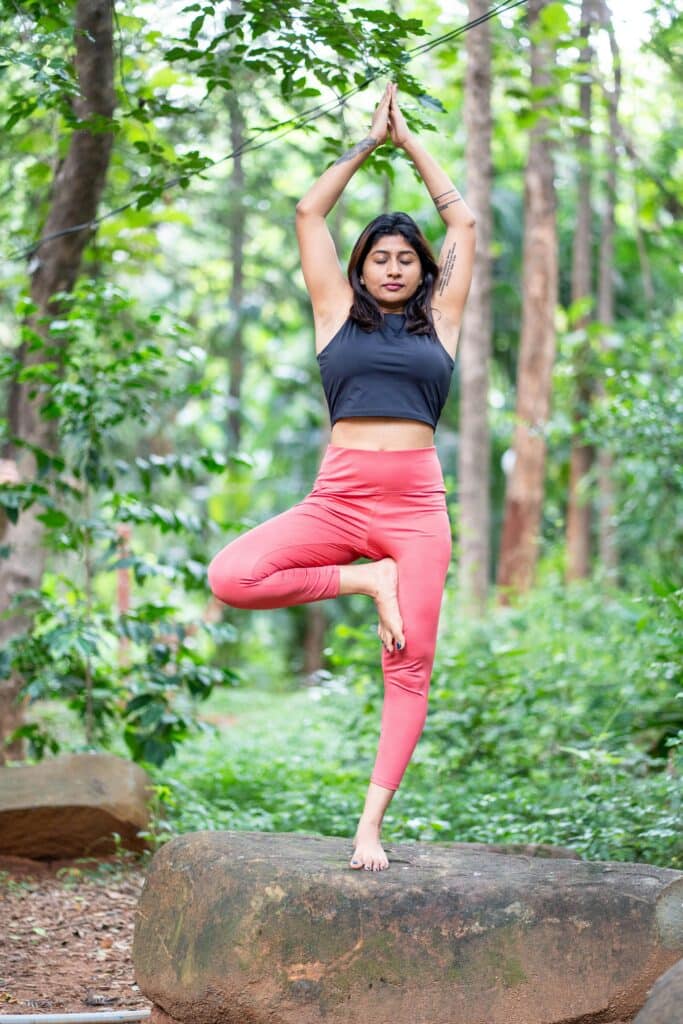
Trying to quiet the mind these days can often prove challenging. Some individuals clear their heads by taking a walk in nature. Others prefer the solitary mindfulness of a yoga class experience. This article explores the new fitness trend of walking yoga, blending the two and elevating the strengths of each.
Taking Mindful Steps
Walking yoga strives to encompass the merits of yoga, awareness of one’s body in space, breathing techniques, and gentle stretching – interwoven with the beauty of taking a simple walk. When done properly, walking yoga can help relieve stress and boost flexibility while also providing the cardiovascular benefits of walking. Backed by a plethora of research, scientists refer to this wondrous combination as a “synergistic behavioral strategy”, whereby the strengths of mindfulness and physical activity amplify each other.
The Key Ingredient
What exactly differentiates walking yoga from other types of exercise? The idea of intention – moving the body in a purposeful way while also remaining acutely aware of one’s place in space. In a yoga class, students flow through various poses on a mat. Walking yoga includes some of these same poses –side stretches, sun salutation, gentle twists of the spine, and lunges, to name a few – done at natural stopping points along the walk. With intention comes awareness: remaining present with each step one takes, moving the body through as great a range of motion as possible, and timing breathing with one’s natural walking cadence.
As we have mentioned, a significant aspect of walking yoga involves moving with awareness of one’s surroundings and how the body feels. “You’re not just walking—you’re noticing the breeze on your skin, the strength in your legs, the ground beneath your feet, and your breath,” says Jennifer Perrini, E-RYT 500, the co-owner of Wild + Free Yoga Studio in New Jersey. This practice helps relax the nervous system, thereby calming both body and mind.
Boosting the Basic Stroll
By including elements of a typical yoga class into a daily walk, one soon comes to appreciate the following benefits:
- Improvements in Mobility/Flexibility – posture changes, reduction of stiffness
- Mitigates Anxiety/Stress – research published in the journal Health Promotion Perspectives revealed that the combination of physical movement with mindful awareness yielded a greater amount of stress release than either active done separately
- Greater Sense of Proprioception/Balance – most yoga poses, when executed correctly, will challenge one’s balance much more than simply walking, either on flat pavement or uneven ground (consider high crescent lunges, tree poses, and warrior II)
- Improved Breathwork – Walking encourages an individual to purposefully engage in diaphragmatic breathing: the true deep, rhythmic inhale/exhale pattern that not only increases lung capacity but also makes the delivery of oxygen to the muscles more successful
- Cardio Workout Minus the Intensity – We acknowledge that yoga rates as a low-impact exercise; walking yoga prioritizes movement quality over speed but can still elevate heart rate sufficiently
Backed by Science at All Ages
In 2022, a study conducted on a college campus sought to determine whether a walking yoga program could benefit students who often experience mental stress and have limited time for exercise. Undergraduate student volunteers participated in a mindful walking route that included seven stops (for yoga poses) over 0.85 miles. Researchers assessed the students pre- and post-participation, measuring mental health constructs of state mindfulness. Data revealed that completing a guided mindful walk could, in fact, reduce anxiety and stress while also increasing mindfulness, making it both effective and an efficient use of a busy student’s time.
Mindful walking integrates two potentially protective factors of dementia, elevating mindfulness and increasing physical activity, while also ensuring the safety of this demographic. After confirming the success by looking at the subjects’ cognitive functioning, states of mindfulness, sleep patterns, psychological well-being, and overall quality of life, scientists determined that this protocol led to positive changes, both short-term and long-term.
Weight Loss and Walking Yoga
Many clients use daily walking for weight loss, perhaps more so than a yoga class. However, the combination of yoga moves in conjunction with a walking regimen has the potential to help with weight loss in a number of ways:
- energy expenditure
- opportunity for additional exercise outside yoga sessions
- lessening joint/back pain, making movement feel easier
- improving mood and reducing stress, which in turn may help reduce food intake
- allowing individuals to feel more connected to their bodies, leading to enhanced awareness of satiety and discouraging the discomfort of overeating
Sample Walking Yoga Protocol
Below, is an example of a beginning walking yoga program. Personal trainers can feel confident sharing this with clients regardless of their age/level of fitness.
Warm-Up (5 Minutes): Start with an easy-paced walk. Focus on breathing — inhale for four steps, exhale for four steps. Roll your shoulders forward and backward a few times. Gently turn your head side to side to release any tension in your neck.
Walk and Flow (20 Minutes): Alternate between 3-4 minutes of intentional walking and 1-2 minutes of yoga movement breaks. During walking intervals, maintain a consistent breathing pattern and pay attention as each footfall connects with the ground.
During movement breaks, try these beginner-friendly poses:
Standing Side Stretch: Stand with feet hip-width apart. Reach both arms overhead, grab right wrist with left hand, and lean gently to the left. Hold for 3-5 breaths, then switch sides.
High Crescent Lunge: Step one foot forward into a lunge, back heel lifted. Keep the front knee over the ankle and reach both arms skyward. Hold for 5 breaths per side. This helps to open up tight hip flexors.
Standing Forward Fold: With feet hip-width apart, hinge at the hips, allowing the upper body to hang toward the ground. Bend knees as much as necessary. The pull of gravity will stretch the hamstrings and lower back; in this position, take 5-8 deep breaths.
Gentle Standing Twist: Stand tall, with hands on hips, and rotate torso to the right, then to the left. Move slowly and breathe deeply into each twist for 3-5 breaths per side.
Cool-Down (5 Minutes): Gradually slow the walking pace until it approximates a stroll. Bring your hands out to the sides and focus on lengthening the spine with each step. Finish with a standing mountain pose (feet together, arms at sides, shoulders relaxed) and take 5-10 deep breaths, preferably with eyes closed.
By definition, yoga means union: of mind, body, and breath. “Walking yoga helps you come back to your senses,” says Jennifer Perrini. “You’re not just walking on autopilot—you’re feeling your feet, noticing your breath, and being present with yourself.” That deeper awareness ranks as one of the biggest gifts of this activity because it brings mindfulness off the yoga mat and into one’s daily life.
Whether a client seeks to shake up his exercise routine or desires a calmer cardiovascular alternative to treadmill running, personal trainers may choose to suggest walking yoga as a powerful brain-body reset. The success of this mindful walking program also holds promise as an effective and affordable strategy for promoting active lifestyles in older populations, making it sustainable over the long term.
References
fitandwell.com/exercise/walking/i-did-30-minutes-of-walking-yoga-every-day-for-a-month-heres-what-i-learned
stylist.co.uk/fitness-health/workouts/walking-yoga-benefits/976139
yahoo.com/lifestyle/walking-yoga-weight-loss-trend-150134998.html
journals.sagepub.com/doi/10.1177/1559827613492097
womenshealthmag.com/fitness/a65403319/walking-yoga/
pmc.ncbi.nlm.nih.gov/articles/PMC3747483/
link.springer.com/article/10.1186/s12877-024-05090-2
pmc.ncbi.nlm.nih.gov/articles/PMC11164429/