

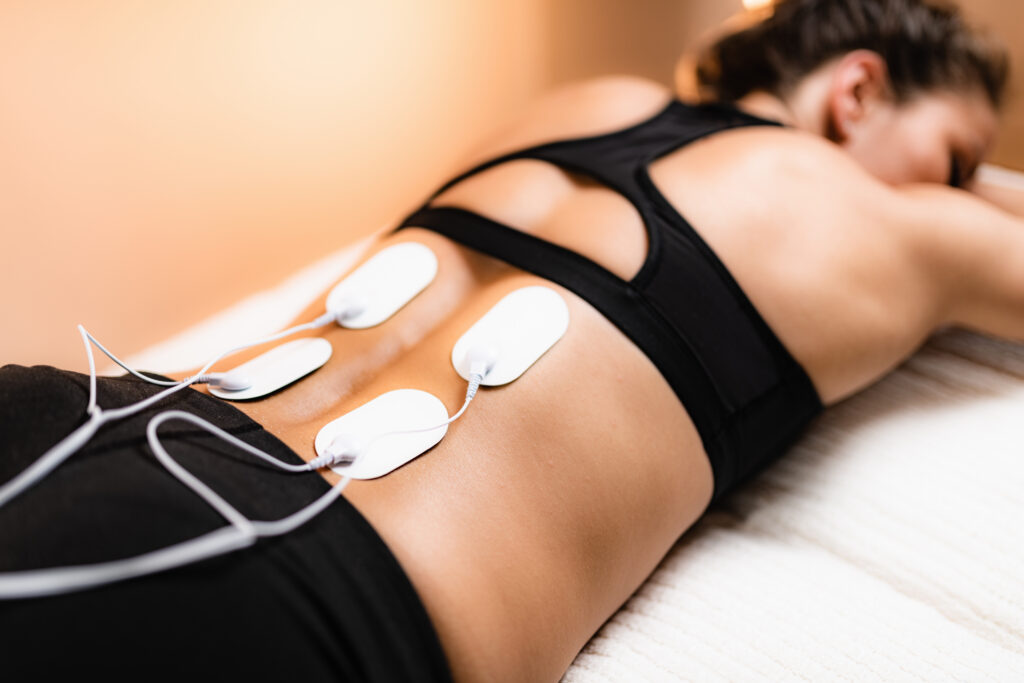
In recent years, the use of electrical muscle stimulation (EMS) to accelerate gains in muscle function and mass has gained considerable popularity. Studies in experimental models and human subjects confirmed that, after a 5-6 week course of treatment, EMS can increase muscle mass by as much as 1% while concurrently improving muscle function by 10–15%. In recent years, scientific/fitness companies have developed EMS devices for use as a complementary training technique in both physical fitness and rehabilitation. This article discusses the effects of EMS at the cellular/muscular levels and explores the many ways this attractive adjunct treatment might yield better results for clients.
From Humble Roots to Mainstream Use
Initially developed to rehabilitate injuries, EMS has found its way into many diverse avenues: sports performance, weight loss, muscle building, and anti-aging treatments. The earliest evidence of EMS dates back to the 18th century, when Italian scientist Luigi Galvani first began work on bioelectricity. Using frog leg specimens, he demonstrated that electrical impulses could cause muscle contractions, laying the foundation for future applications of electrical stimulation in medicine. However, it was not until the 1960s and 1970s that EMS found applications in the medical field.
Over time, medical professionals explored the potential uses of EMS in rehabilitation. EMS works by mimicking the natural electrical signals that trigger muscle contraction. Discovering that the process could successfully activate muscle fibers, even when a patient lacked the ability to move voluntarily, led to its mainstream use in physical therapy and post-operative care as a means of restoring muscle function and thereby warding off muscle atrophy.
Benefits of EMS for Athletes
During a traditional strength-training workout, an athlete’s body typically follows one path: smaller, endurance-focused slow-twitch muscle fibers activate first, followed by the bigger, more powerful fast-twitch fibers. EMS alters this standard by activating those larger fibers right from the start.
Research shows that whole-body EMS systems can stimulate up to 2,800 cm² of muscle area at once. To the athlete, this compares to a full-body workout in which both endurance and power muscle fibers are activated simultaneously, a format that traditional workouts simply cannot match.
When used correctly, EMS can offer athletes a performance edge, especially when integrated into their existing training programs. In addition, when properly administered, EMS may confer the following benefits for those in any athletic pursuit:
- Muscle Strength/Endurance Training: EMS facilitates muscular contractions that simulate and even exceed those attained during physical training. Doing so helps cultivate both muscle strength and endurance. By isolating target muscle groups, which many athletes find challenging even with specific workout programs, EMS helps athletes balance muscle training.
- Injury Prevention: By strengthening muscle groups prone to strain/fatigue, EMS may help an athlete improve balance, agility, posture, and stability. EMS helps athletes maintain muscle mass during recovery/rehab, accelerating their return to sport. Maintaining the mass of muscles near joints helps keep them supported, lessening wear and tear on cartilage and ligaments.
- Enhanced Recovery: EMS stimulates blood circulation, thereby reducing muscle stiffness and enabling faster lactic acid clearance. Better circulation promotes optimal relaxation between training sessions.
- Improved Flexibility/Range of Motion: In reducing muscle stiffness, EMS promotes the relaxation necessary to increase flexibility and range of motion. Relaxed muscles will stretch more effectively. The rhythmic muscle contraction provided by EMS may also reduce involuntary muscle spasms.
- Pain Management: EMS boosts endorphin production, helping athletes manage post-workout discomfort and DOMS. EMS has found use in treating conditions like fibromyalgia, arthritis, and lower back pain. The electrical impulses help block pain signals, relax muscles, and lessen inflammation, thereby offering a drug-free alternative to traditional over-the-counter or prescription pain medications.
The Science
A key point in understanding the advantages of EMS lies in the science behind the product. We can think of electrical muscle stimulation as the body’s own training partner that never fatigues. Upon placing the electrode pads onto the skin, they begin to deliver controlled electrical pulses that travel directly to the motor neurons.
These pulses operate independently of the body’s brain, spinal cord, and central nervous system. Instead, EMS delivers pulses directly to the muscle fibers, which in turn respond with involuntary contractions that feel surprisingly similar to those of a dumbbell contraction.
The majority of EMS systems operate through four key settings that help determine the best way to build muscle in one’s body. Frequency controls how many electrical pulses hit the muscles per second, measured in Hertz (Hz). Intensity determines how strong each pulse feels, typically measured in milliamps (mA). Pulse duration sets how long each electrical signal lasts (usually between 300 and 450 microseconds). Duty cycle balances contraction time with appropriate rest intervals.
More Efficient Use of Gym Time
EMS enhances traditional workouts by utilizing low-frequency electrical impulses to stimulate involuntary muscle contractions, targeting up to 90% of muscle fibers simultaneously. When paired with exercises such as lunges and squats, electrical muscle stimulation increases workout intensity, promotes faster strength gains, and fosters more toned muscles; some individuals find this process can provide an effective full-body, low-impact session in just 20 minutes. Since EMS activates more muscle fibers and increases energy expenditure, the process often leads to a higher calorie burn both during and after workouts. This makes it an effective tool for fat loss, muscle definition, and overall body composition improvement.
Wearing an EMS “suit” and its accompanying wireless electrode systems allows users to engage multiple muscle groups simultaneously. A single session can activate 90% of muscle fibers, compared to just 30-50% in conventional workouts, leading to faster strength gains and muscle toning.
One research study aimed to investigate the effects of frequency-specific EMS coupled with resistance-training workouts on muscle mass, strength, power, body composition, and parameters related to exercise fatigue. The scientists also sought to determine the feasibility and safety of using EMS as ana means to improve body composition.
The protocol extended for 8 weeks and involved 14 male subjects and 14 female subjects, randomly and equally assigned to two groups: (1) no EMS use and (2) daily EMS use coupled with workouts.
The result showed that, when combined with resistance training, daily EMS significantly improved muscle mass and strength and significantly reduced body fat compared to the exercise-alone group. However, EMS did not appear to provide any significant advantage in biochemical parameters related to fatigue and lower-body power. The researchers concluded that 8 weeks of continuous resistance training combined with daily upper-body, lower-body, and abdominal EMS training can significantly improve muscle mass and upper-body muscle strength, while also significantly lowering body fat percentage in healthy subjects.
Use Within the Medical Setting
At its inception, EMS served as an adjunct treatment for physical therapists to use on patients living with muscle atrophy, paralysis, and/or recovery from surgery. Sending electrical impulses to muscles that cannot move independently or have gone inactive helps to prevent the previously inevitable muscle degeneration. In addition, by improving circulation, EMS fosters faster healing.
The plethora of neuromuscular disorders also benefits greatly from the advent of EMS in rehabilitation/treatment settings. Patients suffering from conditions such as multiple sclerosis, cerebral palsy, and Parkinson’s disease take advantage of how stimulation aids help maintain muscle function, improving motor control and reducing muscle stiffness /spasms. Similarly, EMS can help patients rebuild muscle strength and coordination following a stroke or spinal cord injury. Studies show that targeted EMS therapy can improve motor function and even assist with nerve re-education by enhancing communication between muscles and the nervous system.
Following a diagnosis and invasive surgery for breast cancer, many women deal with issues of improper lymphatic drainage, particularly if they have had some lymph nodes removed in the surgical process. Conditions such as lymphedema typically cause discomfort due to extreme swelling. EMS enhances blood flow and lymphatic drainage, thereby reducing swelling and promoting faster healing.
Adding Electrical Muscle Stimulation to a Training Routine
Athletes often use EMS for purposes of strength training and recovery, with guidance from a therapist or trainer. EMS activates the mTOR pathway, the body’s muscle growth switch. It also wakes up satellite cells, the body’s “repair system” that multiplies and helps build new tissue. Research shows that EMS creates metabolic stress in muscles, similar to that burning sensation felt during the last few reps of an exercise set. This stress signals the body to adapt by building stronger, bigger muscles. The process shifts the body’s balance toward muscle building rather than breakdown, improving the anabolic/catabolic balance, exactly what one wants for encouraging the cultivation of lean muscle mass.
EMS sessions generally last 15-30 minutes, depending on the athlete’s goals. EMS intensity varies with the individual, but typically can go as high as tolerated. A minimum of three sessions per week [large pulses, high frequency (50–100 Hz in young and around 30 Hz in older individuals)] for at least 5–6 weeks seems to be optimal.
What to Expect Following an EMS Session
While we have learned much about the health and athletic benefits possible using electrical muscle stimulation, we have not yet explained what one can expect after their initial EMS session. Below, are typical results from a traditional gym workout paired with EMS:
Muscle Soreness: Delayed onset muscle soreness (DOMS) ranks highly as the most commonly-reported side effect. Because EMS activates deep muscle fibers that traditional workouts may not reach, athletes often experience soreness after the first few sessions. This signals that the muscles faced a new challenge and must adapt. Adequate hydration, stretching, and allowing ample recovery time can help ease soreness.
Fatigue After Training: EMS training provides an intense workout in a short time. Since the process effectively activates the muscles, individuals might feel tired or drained after a session, similar to how they might after a high-intensity workout. Proper nutrition, hydration, and rest will help with recovery.
Skin Irritation: The EMS electrodes are placed directly on the skin to deliver electrical impulses. While rare, some people may experience mild skin irritation/redness around the placement site. This typically disappears quickly. For individuals with highly sensitive skin, trainers can adjust the settings or recommend a protective gel.
Increased Circulation and Sweating: EMS training stimulates blood flow, which can increase circulation but may also elicit sweating. This positive effect helps flush out toxins and improve overall muscle function. Here again, we see the value of staying well hydrated and replenishing lost electrolytes to maintain balance in the body.
Temporary Tingling: During and shortly after an initial EMS session, one may experience a mild tingling sensation in the muscles that received the stimulation. This completely normal reaction should fade within a few minutes. If the sensation persists or feels uncomfortable, the trainer can adjust the intensity to ensure a more comfortable experience. Again, this intensity will vary from person to person.
The first 48 hours following an EMS session require a bit of attention, as well as the immediate aftermath. Remember that muscles require at least 48 hours between sessions to fully recover. Avoid the temptation to overtrain. Similarly, high-impact activities like running can place additional strain on the muscles after an EMS session. Stick to low-impact exercises for a few days until the body acclimates to EMS training.
Most trainers know that alcoholic beverages can greatly interfere with hydration as well as muscle recovery. Excessive alcohol consumption can negate the benefits of EMS training. If an individual feels like “celebrating” after a successful first session, encourage them to do so in moderation.
Expecting Too Much from EMS Training
If the aforementioned benefits of lifting weights concurrently with EMS seem like the best possible news for muscularity and body sculpting, we must not fool ourselves into thinking this combination will address and meet all manner of gym-related expectations.
Electrical muscle stimulators fall under the category of “devices” under the Federal Food, Drug, and Cosmetic Act. While an EMS device may successfully strengthen, tone, or firm a muscle, no EMS devices have received clearance at this time for weight loss, girth reduction, or creating the ultimate abdominal six-pack. We need to remind ourselves and our clients that major changes in physical appearance require a prudent diet and regular exercise.
EMS Overuse Precautions for Athletes
EMS supplements regular training by enhancing, not replacing, traditional strength exercises. However, overusing EMS as a therapeutic technique can create soreness and fatigue. As a result, athletes should consult a healthcare professional to develop a tailored EMS treatment plan.
Experts typically do not advocate using EMS training on a daily basis since it can pose risks like muscle fatigue or strain from excessive stimulation. Using it excessively may actually result in diminishing returns when muscles fail to get sufficient time to rest and recover properly for growth and repair purposes.
If an individual experiences lasting soreness after workouts or begins to notice a drop in performance/lack of improvement despite exercise sessions, they might wish to consider cutting back on training frequency or seeking advice from a fitness expert.
As wireless EMS suits and devices suitable for use at home continue to make advances, experts foresee a future of evolving technology, making EMS workouts even more accessible to the general population. Whether used as a standalone workout method or integrated into traditional fitness routines, EMS may prove itself as a game-changer in the world of fitness and weight loss.
The effect of coupling EMS with conventional exercise training to achieve more muscle mass and better function still remains largely controversial. More research will lead to additional clarity on both the safety and efficacy of electrical muscle stimulation.
References
pmc.ncbi.nlm.nih.gov/articles/PMC10586320/
pmc.ncbi.nlm.nih.gov/articles/PMC6104107/#:~:text=Studies%20in%20experimental%20models%20as%20well%20as,around%2010–15%25%20after%205–6%20weeks%20of%20treatment.
chiroher.com/blog/can-electrical-muscle-stimulation-build-muscle
sqai.co/blog/evolution-of-ems-from-therapy-to-fitness-tool/
bellavidaaesthetics.com/guide-ems-sessions-see-changes-miami/#:~:text=To%20achieve%20optimal%20results%2C%20it’s%20recommended%20to,full%2Dbody%20treatment%20or%20targeting%20specific%20muscle%20groups.
compex.com/en-latam/blogs/blog/building-muscle-mass-the-benefits-of-electro-muscle-stimulation
body20.co.uk/blogs/exploring-ems-training-side-effects/
fullcircle.ae/blog-detail/ems-vs-traditional-gym-training-which-is-right-for-you/#:~:text=Muscle%20Activation%20%26%20Efficiency,and%20sets%20to%20fatigue%20muscles.
drcarlisledc.com/blog/1251461-ems-for-athletes-enhancing-performance-and-speeding-up-recovery
perfectlasers.com/news/how-often-should-you-use-an-ems-sculpting-machine/#:~:text=Potential%20Risks%20of%20Overuse%20It’s%20usually%20not,recover%20properly%20for%20growth%20and%20repair%20purposes.
thepainpod.com/blogs/news/can-you-overuse-an-ems-machine-what-the-experts-say#:~:text=Yes%2C%20you%20can%20overuse%20an%20EMS%20machine.,testing%20to%20ensure%20their%20safety%20and%20effectiveness.
fda.gov/medical-devices/consumer-products/electronic-muscle-stimulators#:~:text=Stimulating%20muscles%20repeatedly%20with%20electricity%20may%20eventually,the%20addition%20of%20diet%20and%20regular%20exercise.
cooperaerobics.com/cooper-fitness-center/Electrical-Muscle-Stimulation-EMS/#:~:text=A%3A%20EMS%20is%20primarily%20for,you%20a%20well%2Drounded%20workout.
bodypulse.com/after-your-ems-session/
pmc.ncbi.nlm.nih.gov/articles/PMC6895567/#:~:text=Treatment%20With%20Whole%2DBody%20Electromyostimulation&text=In%20fact%2C%20conducted%20studies%20confirmed,et%20al.%2C%202016).
wsj.com/lifestyle/fitness/electrical-muscle-stimulation-ems-workout-03dce7e3?gaa_at=eafs&gaa_n=AWEtsqdLnY8e2m14pAaissDPVYJIxOf0p9xP5JN_rRoGSakKsp78mHwlXSxbTihTFrE%3D&gaa_ts=69d42ddd&gaa_sig=XPUpkEj-NmQV4SVT9DQw6lwjc0bzquMMeOgVsa_lbZ-uIs7AxwUqUNPCN3KX78-Y3SZ8T3IfyXa5q5mdAAoRtA%3D%3D
ironbodyfit.com/boost-your-metabolism-and-burn-more-calories-the-power-of-ems-training/