

If you want to become a personal trainer, or perhaps are one already, there are many movements you will have to know like the back of your hand. Luckily, most movements are just different variations of the same exercise. The close grip lat pulldown using a V-bar attachment is a variation of a conventional lat pulldown exercise. What makes a V-bar pulldown different than a conventional? Is it even worth doing?
Muscles Worked During V-Bar Pulldown?
The primary muscles stressed in this movement are the muscles in your upper back (latissimus dorsi – center of the back). The rear the forearm flexors, rotator cuff complex, rear deltoids, and biceps are secondary muscles recruited.
Starting Position
Grip the v-bar and extend your arms up over your head. Push your chest up and pull your shoulders back.
Movement
Pull the v-bar down to chin level (90 degrees) as you push your chest up to the bar. Squeeze your shoulder blades together and keep your shoulders down. Take two or three seconds to return the v-bar up to the extended position.
Training Tips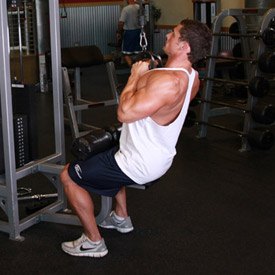
- Keep your chest up and shoulders back and down to help isolate the lats
- Be sure to focus on bringing the bar down with your back muscles, trying not to use just your arms
Options
- You can also use the straight bar lat pulldown bar for this exercise
- Grip the straight bar with an under grip (palms facing up). Perform the movement as stated above
Warning Tips
- Do not let your shoulders rise up as you raise the bar up. Failure to do so can result in serious injury to your shoulders.
- Do not rock up and down as you raise and lower the bar. Failure to do so can result in serious injury to your shoulders, elbows, biceps, and back.
- Do not raise the bar any faster than 2 to 3 seconds. You must be in control at all times when performing this movement. The faster you perform this movement, the less control you will have, which in turn will increase your risk of injury.
Be sure to always take into account eeight selection intensity, and a rep range based one goals of either general fitness, hypertrophy, or strength?