
How to do Pull Ups
A pull up is a compound pull exercise that works a large number of muscles in your back, shoulders, and arms including the lats, lower trapezius, posterior deltoids, and biceps.

Starting Position
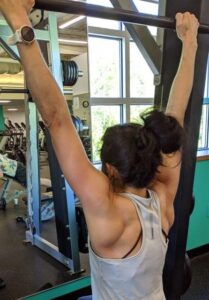
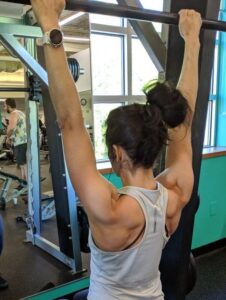
Grip the bar with a firm overhand grip. Make sure your hands are about shoulder-width apart. Keep your arms straight as you hang from the bar and your neck neutral.
Movement
- Start by depressing the scapulae first and keep the shoulders down as you pull yourself upward towards the bar.
- Your chest should nearly touch the bar and your chin is over the bar.
- Do not overextend your cervical spine in an attempt to get your chin over the bar.
- Let yourself down in a controlled and even manner.
Training Tips
- Keep your body straight without arching or swinging.
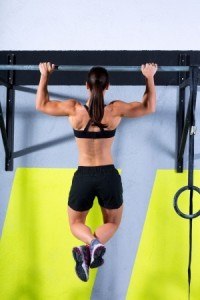
Don’t cross ankles during a pull-up. - You can either bend your knees and keep ankles together or keep your legs straight so long as your feet don’t touch the floor.
- Crossing ankles is a compensation pattern of poor core control. Try not to cross them!
Warning Tips
- Fully extend your elbows in the extended position. Failure to do so can result in injury to your elbows.
- You must stay in control at all times during this movement. The faster you perform this movement, the less control you will have, which in turn will increase your risk of injury. Lower your body at a controlled pace.
- Do not elevate your shoulders while pulling up. This will engage the upper traps, rhomboids and levator scapulae more than necessary, detracting from the working muscles that perform the optimal pull-up.