

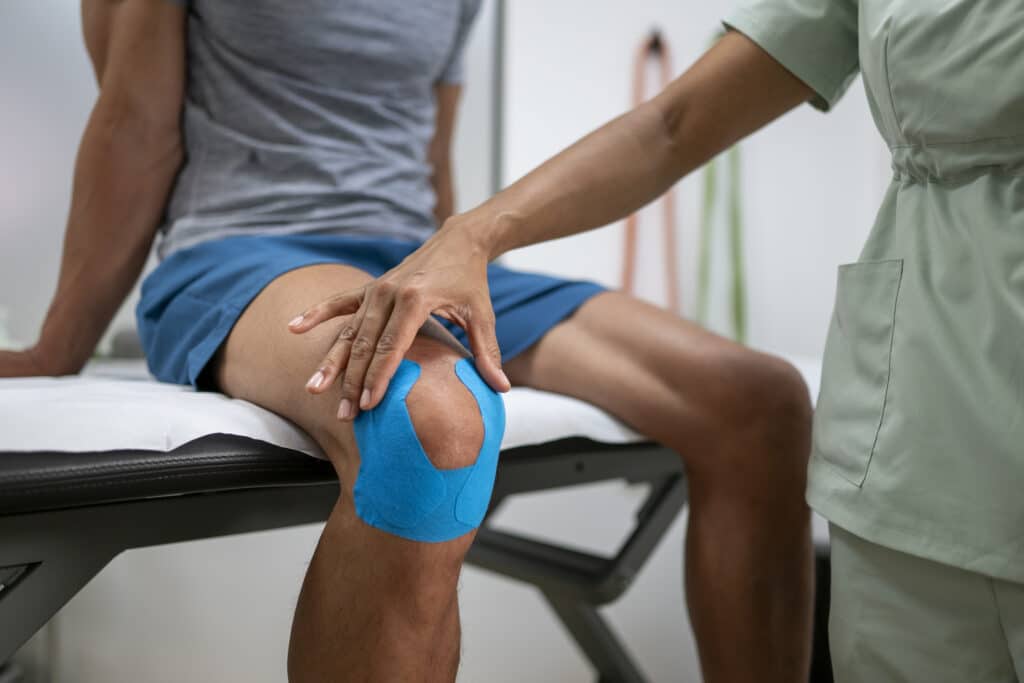
For many years, the viewing public has often seen both amateur and professional athletes with colorful, stretchy tape covering various parts of their bodies. This kinesiotape, also used by athletic trainers and physical therapists, functions in a variety of therapeutic ways to support and activate muscles, improve blood flow, reduce swelling, and relieve pain. Some question the product’s true efficacy, wondering whether athletes may experience a placebo effect with kinesiology taping techniques. However, it seems that actual clinical research supports the claims. This article presents the various mechanisms by which kinesiotape facilitates healing, recovery, and pain management for injured athletes, including a discussion on contraindications for use.
The Evolution of Taping Theory
Dr. Kenzo Kase first developed kinesiology tape in the 1970s to aid muscle movement and enhance athletic performance. This flexible, elastic therapeutic tape is designed to mimic the elasticity of human skin. Unlike rigid athletic tape that restricts movement, kinesiology tape can be worn continuously for several days, enabling athletes to support tissues and joints, reduce swelling, and minimize pain without limiting the body’s natural range of motion.
Kinesiology tape witnessed a rise in popularity during the 2008 Summer Olympics, when the United States’ Women’s Beach Volleyball team of Kerri Walsh and Misty May-Treanor was attempting to secure yet another gold medal in Beijing. At the time, Kerri Walsh sported colorful kinesiology tape across her shoulder to support a rotator cuff injury during her matches. Suddenly, the fancy patterns and colorful tape on Walsh’s exposed shoulder caught the attention of viewers worldwide as they watched this popular pair strive for gold. Soon after, student-athletes started taping injuries during sporting events, weekend warriors taped to control various aches and pains, and professional athletes — including Tiger Woods, Serena Williams, and David Beckham — proudly displayed their various tape configurations.
Product Design
The stretchiness of kinesiology tape allows for freedom of movement, unlike the more rigid rehabilitation tape used to immobilize muscles and joints and provide support after a sports-related injury. A 2021 survey published in the International Journal of Sports Physical Therapy found that most professionals use kinesiology tape for post-injury treatment to help reduce pain and stimulate muscles into action.
Muscle stimulation after an injury plays a big role in the healing process. Upon the application of kinesiotape, the skin sends signals to the nerves, which activate the muscles. When the muscles receive that information, they respond to the stimulation and contract. Muscle contractions produce movement, sustain body posture/position, and help stabilize joints. When used to relieve pain from inflammation and/or lymphedema, specific application of kinesiotape lifts the skin, creating space under the skin that improves lymphatic flow in that area.
A Plethora of Uses
Athletes and/or physical therapists can apply kinesiology tape to nearly any part of the body where muscles, joints, or ligaments need support. Common areas include the shoulders, knees, lower back, ankles, wrists, elbows, and calves. The versatility of this tape makes it suitable for addressing a wide range of orthopedic concerns.
Kinesiology tape works through a combination of mechanical support, neurological feedback, and circulatory system benefits; together, these effects make kinesiology tape a powerful tool for both injury prevention and rehabilitation. Consider the following uses:
- Micro-Lifting of the Skin: The elastic properties of the tape gently lift the top layers of skin, creating small spaces between the skin and the tissues underneath. This reduces mechanical pressure on pain receptors and allows for better lymphatic drainage.
- Improved Circulation: By improving blood flow and lymphatic drainage, kinesiotape accelerates the removal of inflammatory byproducts such as lactic acid and cellular debris.
- Proprioceptive Stimulus: The tape stimulates receptors in the skin that communicate with the central nervous system, enhancing body awareness (proprioception) and helping to correct posture or movement dysfunctions.
- Fascial Glide Assistance: By influencing the fascial layers underneath the skin, taping can facilitate more efficient muscle contractions and reduce friction between tissues.
For best results, one must tailor the taping technique to the specific problem causing the pain or requiring support. Kinesiology tape can serve a wide range of body parts in the following ways:
- Ankle – When treating ankle sprains and instability, kinesiology tape helps stabilize the joint, reduce swelling, and support natural movement during recovery.
- Elbow – For conditions like tennis elbow or golfer’s elbow, tape can reduce strain on the muscles and tendons surrounding the elbow joint, helping to manage pain and improve grip strength.
- Knee – Often applied for issues like runner’s knee or ACL support, kinesiology tape can help guide proper kneecap alignment, reduce pressure on the joint, and provide extra stability without restricting motion.
- Shoulder – When used for rotator cuff strains, impingement, or general shoulder instability, taping this area can reduce muscle fatigue, enhance joint positioning, and prevent further injury during overhead activities.
- Lower Back – For lumbar strain or posture correction, kinesiology tape can support the spinal muscles, reduce stress on the lower back, and promote better alignment, especially helpful for those who spend long hours sitting or lifting heavy objects.
Knee Issues Respond Well to Taping
Two crescent-shaped pieces of cartilage reside inside each knee joint. These menisci comprise the medial meniscus on the inner part of the knee and the lateral meniscus on the outer part. These cushiony pieces of cartilage serve as shock absorbers, helping to stabilize the knee and distribute weight evenly while moving.
Meniscus tears affect approximately 1 million individuals in the U.S. each year, typically resulting from activities that place excessive stress on the knee, such as sudden twists, deep squats, or rapid directional changes during sports. Age-related degeneration can also be a prominent cause, since cartilage tends to wear thin over time.
Symptoms vary from individual to individual, but globally fall into the following areas ~
- Localized pain (inner or outer knee, depending on which meniscus suffered the tear)
- Clicking or popping sensations
- Stiffness
- Swelling
- Reduced range of motion
- Instability or a feeling of locking at the knee joint
Although kinesiotape cannot cure or repair meniscus injuries, it can provide valuable support during an athlete’s recovery phase, once the acute swelling has subsided.
Sciatica
While not technically considered a medical condition, sciatica often results from an underlying issue that profoundly affects the lower spine or its surrounding structures. It manifests itself with sharp pain that travels along the path of the sciatic nerve. Some individuals experience a burning sensation, numbness, tingling, or an overt weakness on one side of the body. The longest and thickest nerve in the body, the sciatic nerve, extends from the lower back through the hips, buttocks, and down the leg.
Sciatica typically develops when the sciatic nerve gets either compressed or irritated due to underlying spinal or muscular issues. Some of the most common causes include the following:
- Herniated or Slipped Disc: a condition in which a spinal disc bulges and presses on the nerve root
- Spinal Stenosis: a narrowing of the spinal canal that places undue pressure on the nerves
- Piriformis Syndrome: a painful spasm or tightening in the piriformis muscle, located in the buttock, thereby irritating the nearby sciatic nerve
- Spondylolisthesis: a condition where one vertebra slips forward over another
When applied for sciatica or any of the above -mentioned conditions, kinesiotaping works by supporting the affected tissues, easing nerve irritation, and/or reducing discomfort at the source. Professionals believe the taping works through the following mechanisms:
- Decompression and Space Creation: When applied correctly, the tape gently lifts the skin, creating a microscopic space between the skin and the underlying tissues. This can reduce pressure on pain receptors, blood vessels, and lymphatic channels.
- Pain Signal Interruption (Gate Control Theory): The sensation of the tape on the skin provides new sensory input to the brain, in effect “distracting” the brain from the deeper pain signals emerging from the sciatic nerve. Medical professionals use the term “closing the gate on pain” to describe this phenomenon.
- Improved Circulation/Lymphatic Drainage: By reducing pressure, the tape can enhance blood flow, facilitating the removal of inflammatory byproducts from the affected area. This, in turn, helps to diminish both swelling and pain.
- Muscle Support and Re-education: The tape provides subtle cues that can help inhibit overactive, tight muscles or facilitate the function of weak/underused muscles, fostering a correction of the imbalances that contribute to sciatica.
Sports Tape versus Kinesiology Tape
In the clinical setting, kinesiology tape can offer many advantages. As a mainly cotton -based tape, it offers great breathability for user comfort. Unlike other tapes, kinesiotape does not lose its effectiveness or adhesive properties when wet, leaving the athlete free to comfortably wear it while bathing/showering. Its flexibility makes it ideal for use on knees and other joints that require movement. Kinesiology tape also functions well in the treatment/ management of edema, bruise mitigation, injury prevention, and rehabilitation.
Sports tape, a stronger and stickier but still useful tool, does a better job than kinesiology tape at reducing the range of motion surrounding a joint. It remains the preferred choice for hypermobile joints or active injuries. Generally, an athlete should remove sports tape after 3 days of use; otherwise, he increases his risk of developing skin irritation/dermatitis.
Safe Skin Preparation and Removal of Kinesiology Tape
To maximize taping efficacy, the skin should receive a bit of attention prior to applying kinesiotape. A clean, dry surface will facilitate bonding with the skin. Oils, lotions, or sweat can prevent the adhesive from sticking properly, causing the tape to peel prematurely.
As with any topical product, the possibility of an allergy or negative reaction exists. Before wrapping an injury, an athlete might consider applying a small strip of tape in an unobtrusive area of the body, where he can check for any discomfort/redness/itchiness that may indicate an allergy.
After applying kinesiotape, the adhesive requires a period of time to fully create a tight bond with the skin. To ensure maximum sticking, the user should avoid showering, swimming, or exercising to the point of heavily sweating for 30-60 minutes following initial application.
Once an injury or swelling has subsided, the user might want to take certain precautions when removing the kinesiology tape. Try to remove the tape in the direction of hair growth. Pulling the tape off too quickly, or against the hair grain, can irritate the skin or cause tiny abrasions. Always work slowly, using lotion or warm water to ease removal if needed.
Not a Perfect Fix
While kinesiology tape, as we have seen, serves many useful functions in the athletic realm, it does have some limitations. Two independent research studies examined the efficacy of kinesiotape in treating musculoskeletal injuries in the lower extremities. Data indicated that the use of kinesiology tape failed to positively affect outcome measures. Two additional studies examined musculoskeletal injuries specifically involving the spine. Here, taping treatment significantly improved pain levels and range of motion in patients with acute whiplash-associated disorders of the cervical spine, both immediately and 24 hours after injury. However, the long-term results did not reflect any benefit. Similarly, subjects with chronic low back pain treated with either kinesiotape and exercise, taping alone, or exercise alone experienced significant improvement in short-term pain, while the exercise-only group also showed significantly less long-term disability. Studies on shoulder impingement injuries likewise mirrored these outcomes.
While these studies reported insufficient evidence to support the use of kinesiotape following musculoskeletal injury, scientists could not rule out a “perceived benefit”. Overall, 54% of publications reported that kinesiology tape was less effective than expected, while 46% found some evidence supporting its effectiveness.
Contraindications in Using Kinesiology Tape
Experts generally consider kinesiology tape safe for most individuals. However, certain circumstances dictate that taping might not serve any useful purpose and can, in fact, incite damage. The most commonly referenced contraindications include the following ~
- Over open wounds/lesion
- Allergy to tape
- On infants/toddlers
- Individuals with diabetes
- Geriatric population, due to fragile skin
- Pregnant abdomen
- Ulna side of the elbow or posterior knee (due to superficial neurovascular structures)
Furthermore, one additional warning merits mentioning. The adhesive on the skin side of kinesiology tape requires only firm rubbing to adhere properly. Never use a blow dryer to expedite this process, as the adhesive can heat up quickly and burn the skin.
Some individuals with comorbid conditions should not consider kinesiology tape even as a secondary option. Users should always consult their physicians in cases of the following ~
- Deep Vein Thrombosis (DVT, or blood clots): Fatalities may result if a clot were to break free and travel to the heart, brain, or lungs.
- Renal Insufficiency: If the kidneys struggle to handle the body’s normal fluid volume, returning additional fluid to them increases the risk of kidney failure.
- Congestive Heart Failure: As mentioned above, moving fluid back to a failing heart can overwork it.
- Infection: Moving fluid associated with an infection can cause the infection to spread.
- Cancer: Similarly, if cancerous cells exist anywhere in the body, taping can cause them to spread to other areas.
While kinesiology tape can greatly enhance an athlete’s recovery plan, using it responsibly ensures its maximum efficacy. For example, during the initial stages of a meniscus tear, rest and ice must come before any consideration of taping. Always consult a physician or physical therapist before using any kinesiology tape.
In addition, kinesiology tape cannot replace a comprehensive recovery plan that includes strengthening, proper movement, and flexibility work. Once properly placed, incorporating stretching exercises into one’s regular routine can complement the support provided by the tape, improving joint mobility and reducing stiffness over time. Always keep in mind that a thorough and sensible recovery plan should include a physical exam, medication if warranted, rehabilitation therapy, and possible short-term lifestyle modifications.
References
https://pubmed.ncbi.nlm.nih.gov/39593437
https://www.hss.edu/health-library/move-better/kinesiology-tape
https://www.kttape.com/blogs/products/5-conditions-when-you-should-not-use-kt-tape#:~:text=Infection%20–%2D%20Tape%20should%20never%20be,Written%20by%20KT%20Tape%20Team
https://www.verywellhealth.com/should-you-avoid-using-kinesiology-tape-2696036#:~:text=Key%20Takeaways,who%20are%20hypersensitive%20to%20acrylic.
https://pmc.ncbi.nlm.nih.gov/articles/PMC10590486/#:~:text=Flexible%20knee%20orthoses%20are%20elastic,cost%2Deffectiveness%20because%20of%20reusability.
https://pmc.ncbi.nlm.nih.gov/articles/PMC9885497/#:~:text=Conclusion,with%20EDS%20and%20shoulder%20pain.
https://www.kttape.com/blogs/kinesiology-blog/kt-tape-for-knee-meniscus-support#:~:text=Although%20KT%20Tape%20is%20not,and%20comfort%20during%20daily%20activities.
https://pubmed.ncbi.nlm.nih.gov/23306413
https://www.physiotattva.com/therapies/kinesio-taping-therapy-for-sciatica#:~:text=Kinesio%20taping%20therapy%20offers%20a,of%20a%20structured%20physiotherapy%20programme.