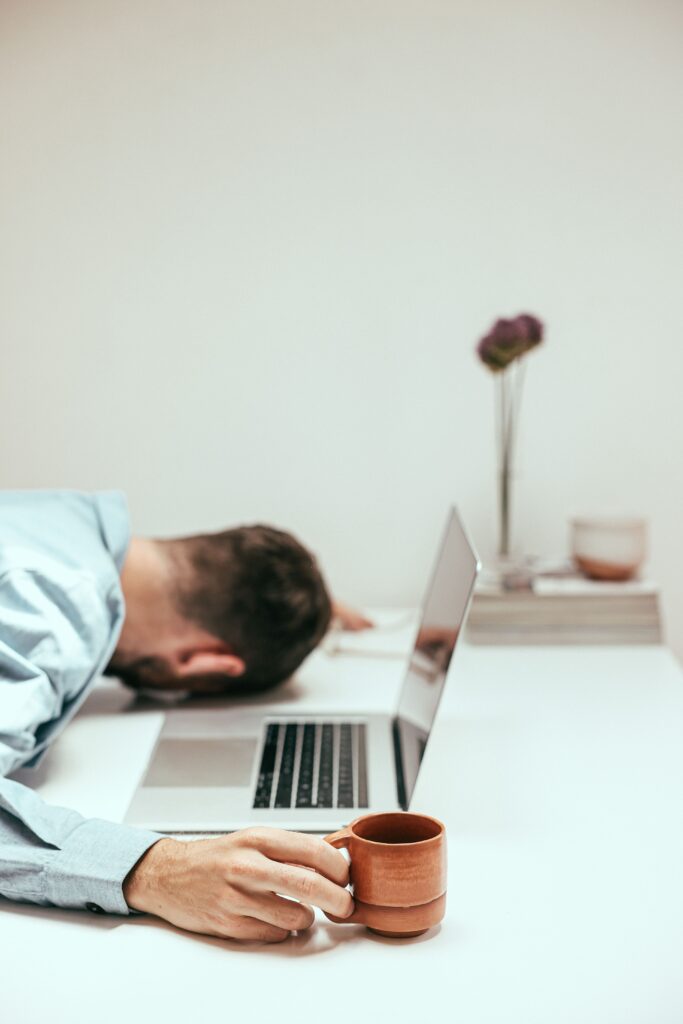
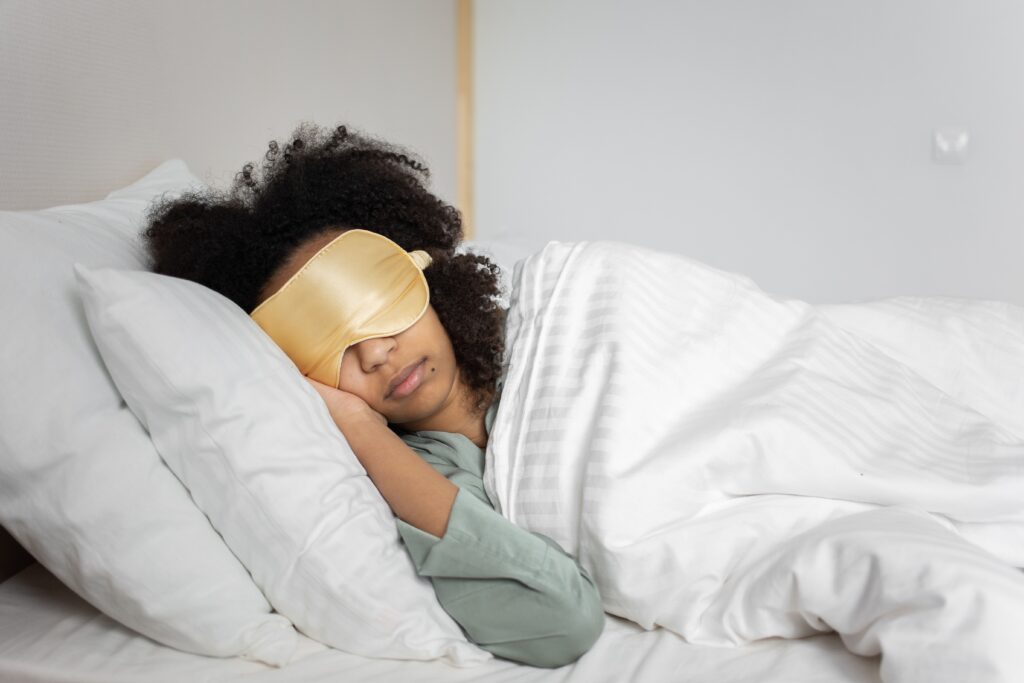
A client arrives for a planned strength session after a short night and asks whether training is still worthwhile. The temptation is to answer with a rule: push through, reduce everything, or send them home. Sleep loss and exercise performance, however, deserve a more careful interpretation than any of those automatic responses.
In the first article of this recovery-literacy series, we separated soreness from muscle growth. Here, we examine a different distinction: what sleep research tells us about performance and muscle biology, and what it actually authorizes a trainer to change. A study can identify a concern without supplying a ready-made prescription.
NFPT’s Why Sleep and Recovery Is So Important For Personal Training Clients establishes the broader relevance of sleep. The practical question for this article is narrower: how should a trainer interpret a short night when planning today’s work without turning one sleep report into either a diagnosis or a prediction of failure?
In this article, we will examine:
- Why sleep-loss findings vary across tasks and protocols.
- Why an acute muscle-protein finding cannot predict long-term growth.
- How trainers can make proportionate decisions while staying within scope.
Define the Sleep Problem Before Interpreting It
Total sleep deprivation and partial sleep restriction are not interchangeable. The former can mean an entire night without sleep; the latter involves less sleep than usual. Sleep quality and interruptions also matter, although experiments frequently define exposure by duration because it is easier to standardize.
Craven and colleagues (2022) defined acute sleep loss as six hours or less in a 24-hour period for their review. That was an inclusion criterion, not a threshold below which every client becomes unable to train. Similarly, a control condition of more than six hours should not be mistaken for a public-health recommendation.
The American Academy of Sleep Medicine and Sleep Research Society recommend seven or more hours regularly for healthy adults aged 18–60, with individual needs and circumstances requiring consideration (Watson et al., 2015). This health guidance helps frame a conversation; it does not prescribe the load on a client’s next set.
Ask what changed. Was this one short night or a recurring pattern? Was sleep opportunity reduced, or did the client have difficulty sleeping despite adequate opportunity? Is the person alert enough to participate safely? These questions identify different coaching concerns without asking the trainer to determine the cause of a sleep disorder.
An Average Performance Effect Is Not a Loading Formula
Craven et al. (2022) synthesized 69 publications covering 959 participants, most of whom were male. Across diverse exercise tasks, sleep loss had a negative average effect on performance, but the results varied substantially. Exercise type, timing, and the sleep-loss protocol influenced interpretation.
The strength-specific analysis is particularly useful for resisting an exaggerated headline. Its pooled decrease was about 2.9%, rather than the larger overall figure combining different performance categories. Even that strength estimate is a group-level finding from research tasks—not an instruction to subtract 2.9% from every client’s working weight.
Specifically, laboratory performance outcomes do not identify the best session adjustment for a middle-aged client with several health conditions, nor do they establish a universal safe sleep minimum. Population, task, and context determine how far the result can reasonably travel.
Easow and colleagues (2025) subsequently reviewed 13 studies of sleep loss and strength-related performance. Some outcomes declined, while others showed no significant difference. Their review also highlighted small samples and limited generalizability. These mixed findings should temper certainty without encouraging us to dismiss sleep altogether.
To illustrate, a weather forecast can justify preparing differently without telling every person to wear the same coat. Sleep information has a similar role. It informs the conditions under which the session occurs; it cannot determine the entire session on its own, independent of the person completing it.
Muscle Biology Matters, but the Time Scale Matters Too
Lamon and colleagues (2021) studied 13 healthy young adults in a randomized crossover experiment comparing a night of total sleep deprivation with a control condition. Postprandial muscle protein synthesis—the production of muscle proteins measured after feeding—was lower following deprivation.
That finding provides a plausible biological reason to take sleep seriously. It does not show that a client who sleeps less than usual will lose a predictable amount of muscle, or that one compromised night erases the previous month’s training. The experiment measured an acute response after no sleep, not long-term hypertrophy after ordinary variations in sleep.
Nor did the experiment change all measured biological outcomes. The investigators found no changes in the assessed muscle gene-expression markers of protein degradation. Consequently, claiming the experiment proved increased muscle breakdown goes beyond what was measured.
From a muscle-health perspective, the useful message is that sleep belongs alongside training when considering the conditions for adaptation. The less useful message is a frightening percentage presented as a forecast of lost gains. Clients need an accurate interpretation, especially when their sleep circumstances are already difficult.
Separate Safety, Training Purpose, and Session Dose
For coaching purposes, I would separate three decisions. First, can the client participate safely? Second, what is the session intended to develop? Third, what amount and difficulty of work appear appropriate today? Resolving these in order prevents a discussion of training efficiency from overriding a safety concern.
If the client cannot remain alert, cannot follow instructions, or reports concerning symptoms, stop and address the immediate issue rather than using a warm-up to justify proceeding. Persistent or unexplained excessive sleepiness belongs with a healthcare professional. A trainer should not diagnose its cause or prescribe a sleep medication.
When participation is appropriate, use the planned warm-up to observe familiar movements and discuss perceived difficulty. Consider maintaining the planned work when the client is alert and performs it appropriately. If familiar work is unusually difficult or control deteriorates, reduce the demand or replace a technically demanding task with a more manageable alternative.
These are practical coaching recommendations, not adjustments validated by the cited sleep experiments. There is no single research-backed percentage reduction that fits every short night. Avoid compensating for reduced loading by adding enough work to recreate the original fatigue.
NFPT’s Recovery is Part of the Workout considers the broader interaction between life circumstances and programming. The specific contribution here is to make the evidence-to-decision boundary explicit: sleep research informs our judgment, while the client’s presentation and the session’s purpose guide the actual choice.
A Hypothetical Example: Change the Question, Not Just the Weight
Consider a client scheduled to learn a new, technically demanding lift after interrupted sleep. The client remains alert but has difficulty reproducing the usual movement cues. Rather than insisting on the original lesson, the trainer could practice an already familiar movement at a manageable demand and defer the new skill.
The objective is not to diagnose impaired neuromuscular function from one session. It is to preserve a useful training experience when the planned learning task is not going well. Document the sleep report, observed difficulty, adjustment, and subsequent response so the next decision is informed by more than memory.
A different client reporting a short night may move normally and complete appropriate planned work. Treating these clients identically would confuse a risk-relevant exposure with a guaranteed outcome. Individualization requires attention, but it also requires restraint in what we claim to know.
Support Sleep Opportunity Without Becoming a Sleep Clinician
Start with an achievable change rather than an elaborate recovery routine. NHLBI’s healthy sleep habits guidancerecommends protecting time for sleep, maintaining consistent schedules where possible, and creating a quiet, cool, dark environment. Discuss which change fits the client’s circumstances instead of assigning an idealized bedtime to someone working rotating shifts.
The CDC’s About Sleep resource also distinguishes sleep duration from sleep quality and advises consulting a healthcare provider for sleep problems. Ongoing difficulty sleeping, repeated awakenings, or tiredness despite adequate sleep opportunity should prompt referral rather than increasingly confident advice from the trainer.
Ultimately, a short night is information to interpret. Take it seriously, keep the scientific boundaries visible, and make the session decision proportionate to the person and task. Better coaching does not require certainty about every physiological consequence. It requires knowing which conclusions the evidence supports—and which decisions still demand professional judgment.
References
Centers for Disease Control and Prevention. (2024). About sleep. https://www.cdc.gov/sleep/about/index.html
Craven, J., McCartney, D., Desbrow, B., Sabapathy, S., Bellinger, P., Roberts, L., & Irwin, C. (2022). Effects of acute sleep loss on physical performance: A systematic and meta-analytical review. Sports Medicine, 52(11), 2669–2690. https://doi.org/10.1007/s40279-022-01706-y
Easow, J., Bommasamudram, T., Munnilari, M., Adhikari, R., Edwards, B. J., Nayak, K. R., Vaishali, K., Ravindrakumar, A., Gallagher, C., & Pullinger, S. A. (2025). Implications of sleep loss or sleep deprivation on muscle strength: A systematic review. Sleep and Breathing, 29, Article 242. https://doi.org/10.1007/s11325-025-03413-0
Lamon, S., Morabito, A., Arentson-Lantz, E., Knowles, O., Vincent, G. E., Condo, D., Alexander, S. E., Garnham, A., Paddon-Jones, D., & Aisbett, B. (2021). The effect of acute sleep deprivation on skeletal muscle protein synthesis and the hormonal environment. Physiological Reports, 9(1), Article e14660. https://doi.org/10.14814/phy2.14660
National Heart, Lung, and Blood Institute. (2022). Sleep deprivation and deficiency: Healthy sleep habits.https://www.nhlbi.nih.gov/health/sleep-deprivation/healthy-sleep-habits
Watson, N. F., Badr, M. S., Belenky, G., Bliwise, D. L., Buxton, O. M., Buysse, D., Dinges, D. F., Gangwisch, J., Grandner, M. A., Kushida, C., Malhotra, R. K., Martin, J. L., Patel, S. R., Quan, S. F., & Tasali, E. (2015). Recommended amount of sleep for a healthy adult: A joint consensus statement of the American Academy of Sleep Medicine and Sleep Research Society. Journal of Clinical Sleep Medicine, 11(6), 591–592. https://doi.org/10.5664/jcsm.4758